

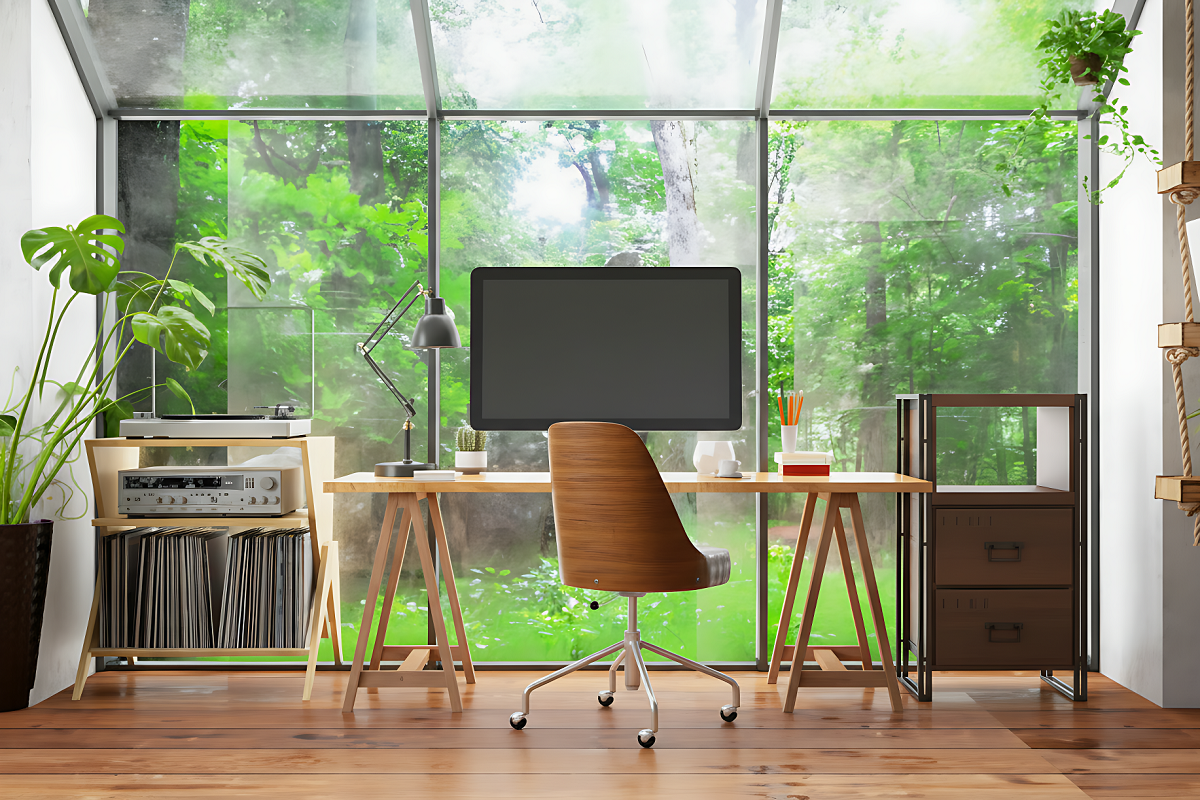
Highlights:
- Even small spaces can be transformed into efficient, productive work areas with clever layouts, vertical storage, and multi-functional furniture.
- Natural light and well-planned lighting solutions improve mood, focus, and reduce eye strain in your workspace.
- Comfort and style can coexist through ergonomic seating, soft textures, and functional decor that enhances both form and function.
- Personal touches, such as artwork, decorative organizers, and plants, make your home office feel inviting and uniquely yours.
- Minimalism and intentional design reduce clutter, foster focus, and create a clean, calming environment.
- Thoughtful integration of technology, including smart lighting, cable management, and ergonomic tech furniture, boosts productivity.
- Multi-functional zones, flexible furniture, and creative use of color and texture make the home office adaptable, inspiring, and enjoyable to work in.
Working from home has become the norm for many people, and creating a home office that’s both functional and stylish can make a huge difference in your productivity, mood, and overall wellbeing. A thoughtfully designed workspace doesn’t just look good—it helps you stay organized, focus better, and feel motivated throughout the day.
Whether you’re working in a small nook, converting a spare room, or planning a dedicated home office space, there are plenty of ways to blend aesthetics with practicality. Here are ten creative home office ideas that strike the perfect balance between function and design.
1. How Can You Make the Most of a Small Space?
Not everyone has the luxury of a large room for a home office. But even tiny corners or unused nooks can be transformed into a highly functional workspace with smart planning and clever furniture choices.
- Floating desks and wall-mounted solutions: These keep the floor space open, giving the room an airy feel. You can even install fold-down desks that tuck away when not in use.
- Vertical storage: Shelving units that go all the way up to the ceiling make use of vertical space without cluttering the floor. Adding decorative baskets or boxes on these shelves keeps everything organized while looking intentional.
- Multipurpose furniture: Consider desks with built-in storage drawers, foldable chairs, or modular shelving that can adapt as your needs change. For example, a compact desk with hidden compartments can store office supplies without overcrowding the workspace.
- Corner workstations: An L-shaped desk can turn an unused corner into a productive hub, giving you more surface area while still fitting into a small footprint.
Even in the smallest spaces, thoughtful layouts and versatile furniture can turn your home office into an efficient, enjoyable workspace.
2. Why Natural Light Matters for Your Productivity
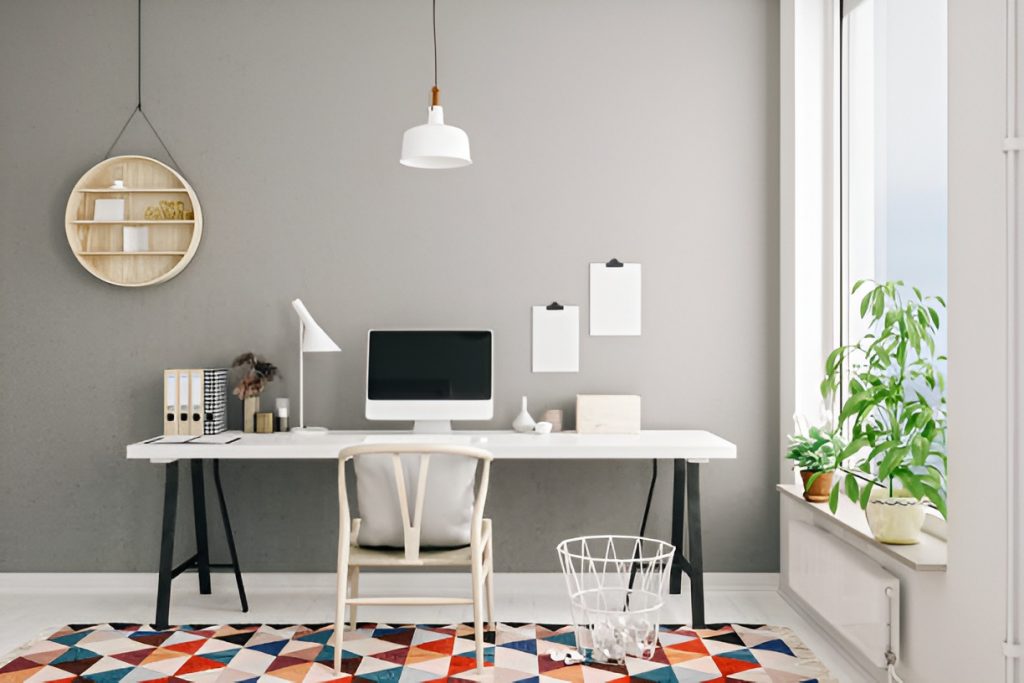
Lighting is one of the most important, yet often overlooked, elements of a home office. Natural light can enhance your mood, reduce eye strain, and even improve productivity.
- Desk placement near windows: Positioning your desk near a window lets you take advantage of daylight. This not only creates a brighter, more inviting workspace but also helps regulate your natural sleep cycles.
- Diffusing light: If sunlight is too harsh, use sheer curtains or blinds to diffuse it. You’ll still get brightness without glare on your computer screen.
- Reflective surfaces and mirrors: Mirrors strategically placed can amplify natural light, making your office feel bigger and more open. A glossy desk surface or metallic decor can also reflect light subtly.
- Supplementary lighting: For cloudy days or evening work, consider adjustable desk lamps with warm LED bulbs that mimic natural daylight. These reduce eye strain while maintaining a pleasant ambiance.
A well-lit office, whether through natural sunlight or carefully chosen lighting fixtures, sets the stage for both comfort and productivity.
3. Can You Blend Comfort and Style?
Comfort and style don’t have to be mutually exclusive. A home office that feels good to work in can also inspire creativity and focus.
- Ergonomic seating: A chair with adjustable height, lumbar support, and comfortable padding is essential. Look for one that complements your office aesthetic—many modern ergonomic chairs come in colors and fabrics that add style.
- Soft textures: Adding an area rug, cushions, or a cozy throw can make the office feel welcoming while dampening noise and adding warmth.
- Functional decor: Choose desk accessories and organizers that are both practical and visually appealing. For instance, a stylish pen holder or a decorative file organizer can double as decor.
- Standing desks or adjustable desks: These offer flexibility, allowing you to switch between sitting and standing throughout the day, promoting both comfort and health.
When comfort and style go hand-in-hand, your workspace becomes a place you actually look forward to spending time in.
4. How About Adding a Touch of Personality?
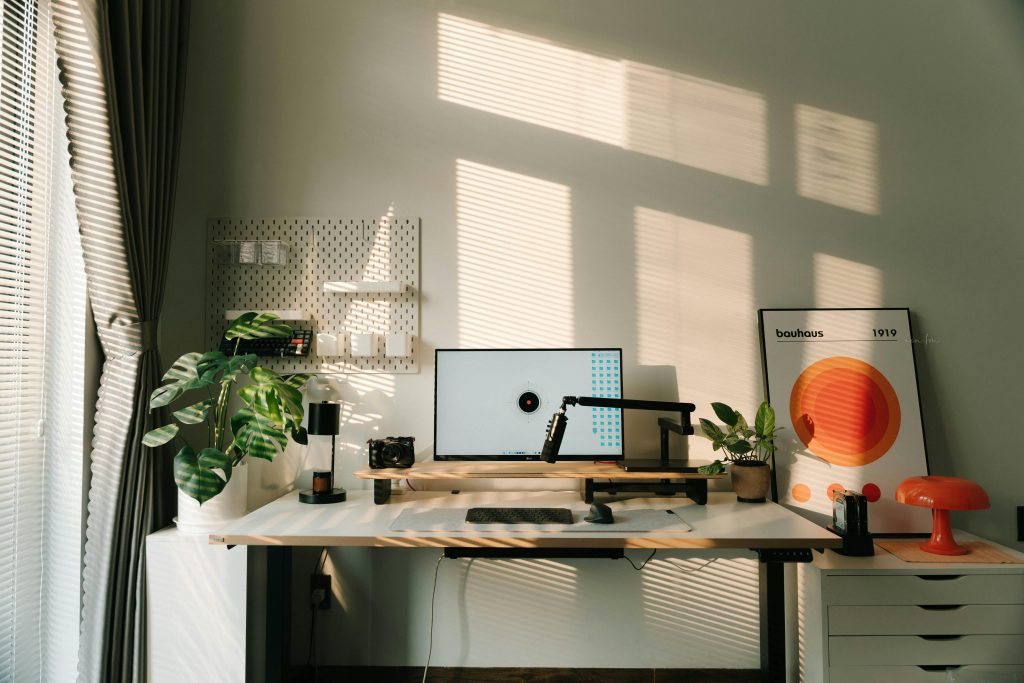
Your home office should reflect your personality and spark creativity. Personal touches make a space feel inviting and uniquely yours.
- Art and photos: Frame prints, posters, or photos that motivate or inspire you. Rotating artwork keeps the space fresh.
- Statement lighting: A unique lamp or pendant light can become a focal point of the room while providing functional illumination.
- Decorative organizers: Storage doesn’t have to be boring. Use colorful baskets, patterned boxes, or chic trays to organize supplies.
- Plants and natural elements: Small potted plants, vases with fresh flowers, or even a terrarium can infuse life into your office while maintaining personality.
Even small personal touches can make your home office feel more like a space that belongs to you, not just a generic workroom.
5. Why Minimalism Can Boost Focus
A cluttered workspace can make it hard to concentrate. Minimalism encourages you to keep only what you need while maintaining a clean, stylish environment.
- Clear desk policy: Keep only essential items on your desk and store everything else. Minimalism reduces distractions and mental fatigue.
- Neutral colors: Soft shades like white, beige, gray, or muted pastels create a calm environment that fosters focus.
- Hidden storage: Cabinets, drawers, or even decorative boxes can keep office supplies out of sight while maintaining the aesthetic.
- Intentional design choices: Every piece of furniture or decor should serve a purpose. A minimalist approach doesn’t mean boring—it’s about thoughtful, functional design.
Minimalist offices are perfect for those who want a serene, distraction-free environment that looks modern and sophisticated.
6. Can Technology Make Your Home Office Smarter?
Technology can enhance both the functionality and comfort of your home office when integrated thoughtfully.
- Smart lighting: Automated lights that adjust according to time of day help maintain energy and reduce eye strain.
- Cable management: Tidy cords prevent clutter, reduce hazards, and create a cleaner workspace.
- Voice assistants: Devices like smart speakers can manage reminders, schedules, and even play background music without interrupting your workflow.
- Tech furniture: Desks with built-in charging stations or monitor arms streamline your setup and reduce clutter.
Using technology strategically turns your office into a seamless, efficient environment without feeling overwhelming.
7. What About Adding Greenery?
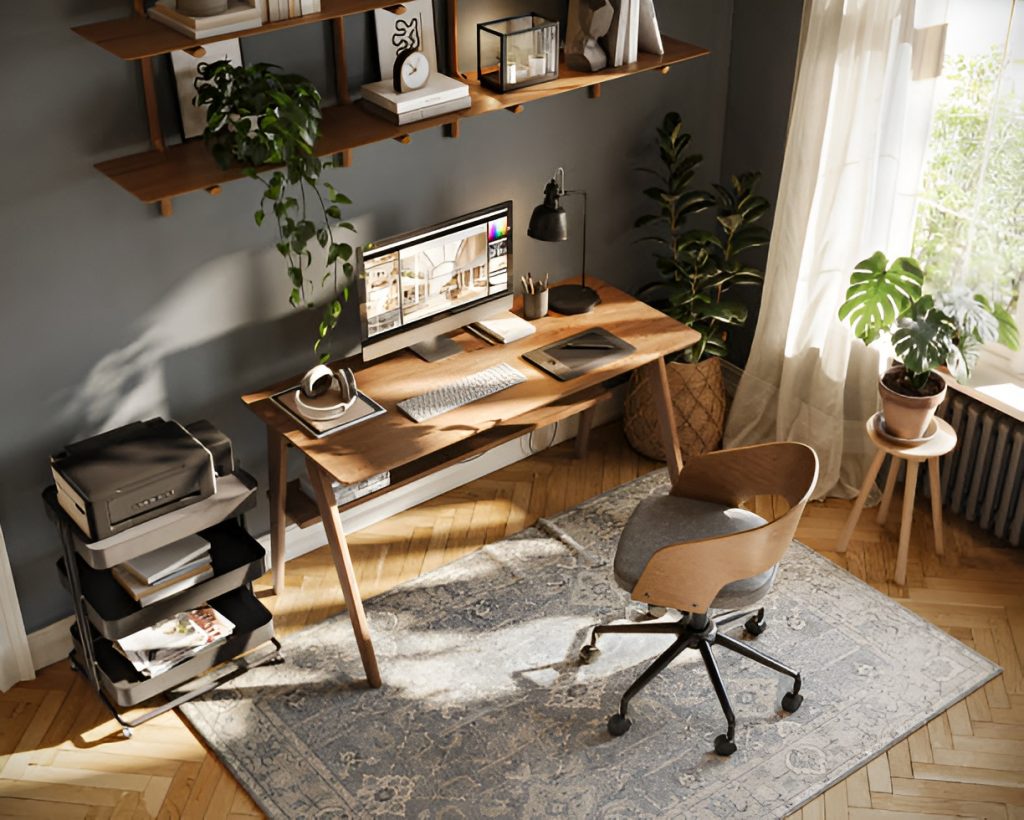
Plants are one of the simplest ways to add both beauty and function to your home office. They improve air quality, reduce stress, and provide a calming influence.
- Small desk plants: Succulents, cacti, or small ferns are low-maintenance and perfect for desktops.
- Medium plants: A fiddle-leaf fig or rubber plant in a corner adds height and greenery.
- Large plants: Floor plants like palms or monstera can act as natural room dividers in multi-functional offices.
- Maintenance tips: Choose plants based on lighting conditions in your office. Low-light areas benefit from plants like snake plants or pothos.
Adding greenery isn’t just about looks—it creates a healthier, more enjoyable work environment.
8. How Do You Design for Noise Control?
Noise can be a huge distraction, especially if you share your home with others. Fortunately, there are practical ways to make your home office quieter.
- Soft furnishings: Rugs, curtains, and upholstered furniture help absorb sound.
- Acoustic panels: Decorative acoustic panels on walls reduce echo and noise from adjoining rooms.
- Room layout: Positioning the desk away from noisy areas like hallways or living rooms can help.
- Exterior materials: If your office is part of a new addition or converted space, choosing modern siding for the exterior can provide extra insulation from outside noise while giving your home a sleek, updated look.
A quiet office, even in a busy household, is achievable with careful design and planning.
9. How Can You Create Multi-Functional Zones?
Sometimes your home office isn’t just for working—it may double as a creative studio, reading nook, or meeting area. Zoning helps maintain order while maximizing usability.
- Separate work areas: Use room dividers, screens, or shelving to define different zones. If space is limited, you might choose to build a home addition to create enough room for multiple functions without crowding your existing rooms.
- Storage zones: Keep office supplies, books, and personal items in designated areas to prevent clutter from spreading.
- Flexible furniture: Lightweight chairs, rolling carts, or foldable tables allow you to reconfigure the space as needed.
- Task-specific lighting: Add a desk lamp for work and softer lighting for reading or creative tasks.
Multi-functional zones let you shift between tasks seamlessly, keeping the office organized and productive.
10. Why Don’t You Play With Color and Texture?
Color and texture can transform a workspace from dull to inspiring. The right combination can energize, calm, or motivate, depending on your needs.
- Accent walls: A bold color behind your desk draws focus and creates a visual anchor.
- Layered textures: Mix wood, metal, and fabric to create depth and interest.
- Patterned elements: Rugs, wallpaper, or curtains can add personality without overwhelming the space.
- Personal taste: Choose colors and textures that reflect your personality and make the office feel like your own.
Experimenting with color and texture turns a functional home office into a space you enjoy spending time in every day.
Final Tips to Tie It All Together
- Plan before buying: Measure your space and plan furniture layout carefully.
- Balance style and function: Every decorative item should serve a purpose.
- Invest in essentials: A quality chair, desk, and lighting make the biggest difference.
- Personalize wisely: A few well-chosen accents can elevate the entire space without clutter.
By combining thoughtful layouts, creative design, personal touches, and practical solutions, your home office can be both highly functional and visually inspiring.
Wrapping It Up
Designing a home office that blends function and style doesn’t have to be overwhelming. Whether you’re working with a small corner, converting a spare room, or planning a dedicated space, thoughtful layouts, smart storage, and personal touches can transform your office into a place you enjoy spending time in. By balancing comfort, organization, and creativity, you can create a workspace that boosts productivity while reflecting your personal style.
Remember, a home office is more than just a desk and chair—it’s an environment that supports focus, creativity, and well-being. With a little planning and some imaginative design choices, your office can become both practical and inspiring, making every workday feel a little more enjoyable.